

The #1 skill nobody talks about
I learned it at 10 years from playing video games

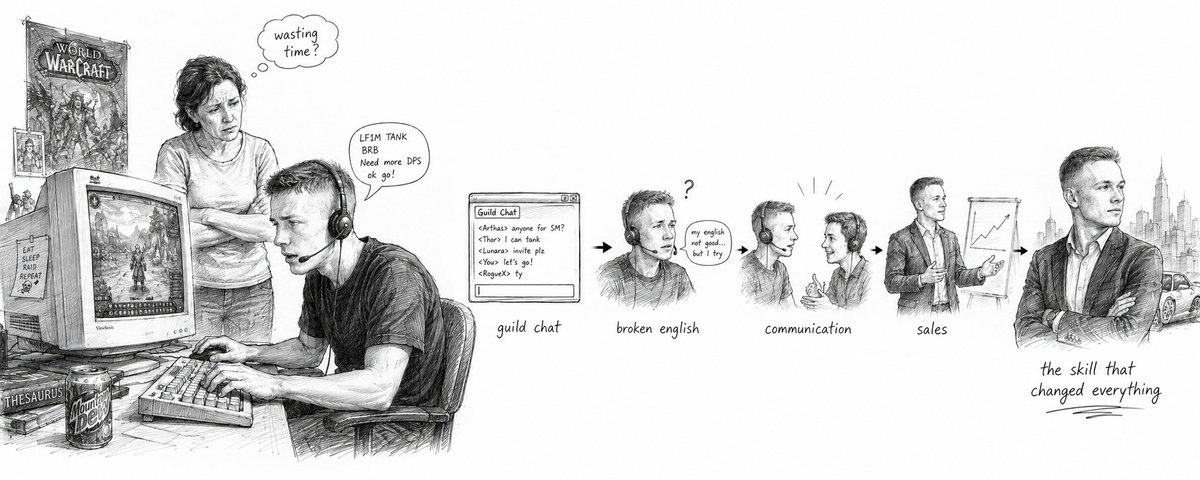
I learned the single most useful skill of my life from a video game.
I was ten at the time. My brother had just gifted me World Of Warcraft for Christmas back when The Burning Crusade expansion had just launched.
A gift that later turned out to be sole reason that I am were I am today.
The game lived on a beige computer in the corner of our apartment in back in Denmark. You know, once of those big bulky ones you’d have in the early 2000’s.
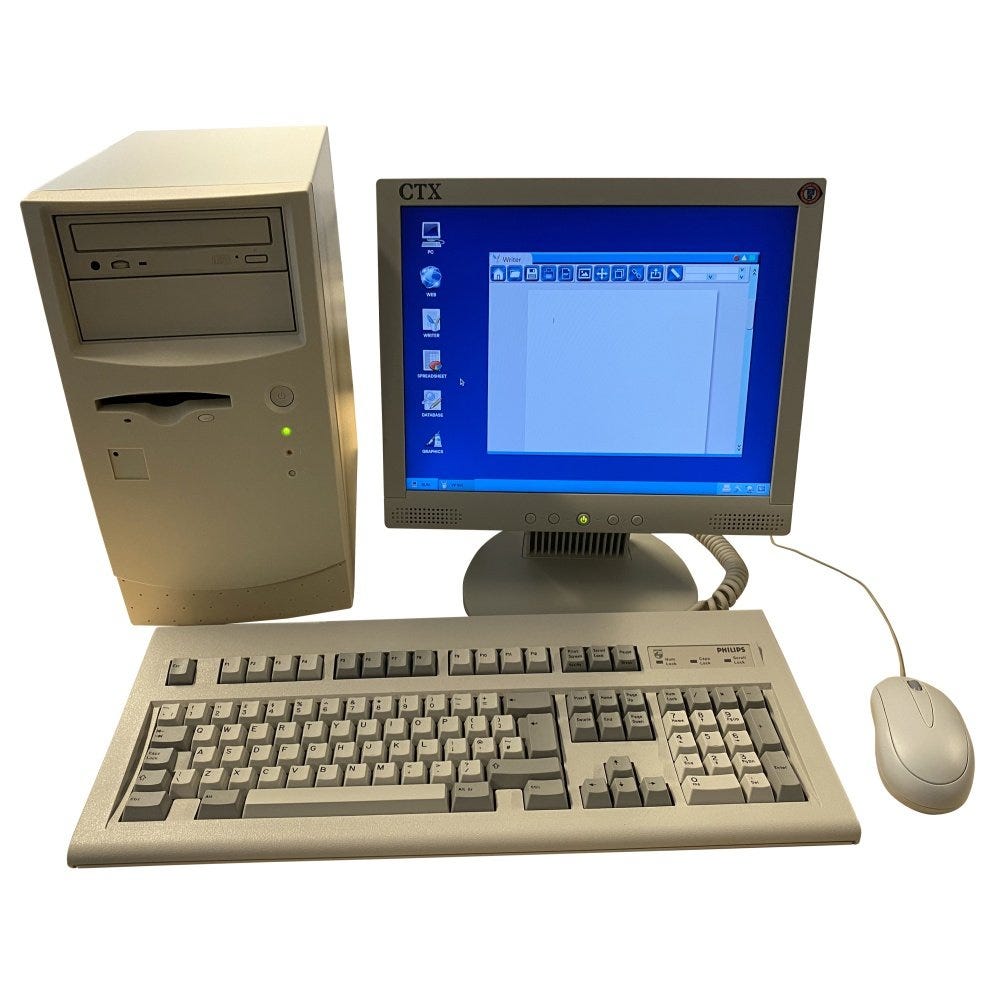
(i know you know)
The game had this in-game chat where you could engage with other players. I understood maybe half of what people was typing.
The issue was that the other half held the information I needed to keep my party alive every time we went in a dungeon: manabreaks, who to heal, taking aggro, and so on. If I couldn’t read it fast enough, the team wiped.
So I was forced to learn how to read it fast enough.
Nobody assigned me this. There was no textbook, no teacher, no Duolingo streak. There was a screen full of strangers speaking a language I didn’t have, and a very strong desire to win, and that turned out to be the only curriculum I needed. Within a year I was typing back. Within two I was thinking in it.
My mum used to stand in the doorway and tell me to log off, that I was wasting the whole afternoon and to go outside. Today, I understand why it looked that way. But what neither of us could see, was that I was quite literally pouring the foundation the rest of my life would quietly stand on.
Here’s the part that took me twenty years to understand.
The skill I picked up that year only looked like English. English was the surface. The thing underneath it, the thing that actually mattered, is the one almost nobody talks about, and it’s the first thing I’d hand my own kid when I have one, before anything else.
Fourteen, in a room full of accents
I turned out to become pretty good at English considering my age.
The second layer arrived at 14, when I started at a school that offered international classes. I was presented the choice: learn in Danish like 99% of everyone else, or start in the class where all the teaching would be in English.
I chose international.
Up to that point my English was mostly gaming-English: functional, fast, full of slang I’d absorbed from teenagers in other time zones. Then I was in a room where no Danis was allowed. All of us meeting inside a shared second language none of us had really been born into.
Something cracked open that I can only describe properly now, years later.
I noticed the Greenlandic kids were funny in a way Danish humor had no setting for, warmer and more physical, quicker to laugh at themselves. I noticed the UK kids said exactly what they meant and it read as honesty instead of rudeness, which back home it might not have. I noticed I became a slightly different person in English than I was in Danish, looser, more willing to say the ambitious thing out loud without flinching.
That last one stuck with me.
In Danish there’s a kind of cultural gravity that works against you the moment you reach above the group. We have a name for it back home, more or less, The Law of Jante (here’s a full essay I wrote on it), which is an unspoken rule that you are not to think you’re anything special, that standing out is close to a sin.
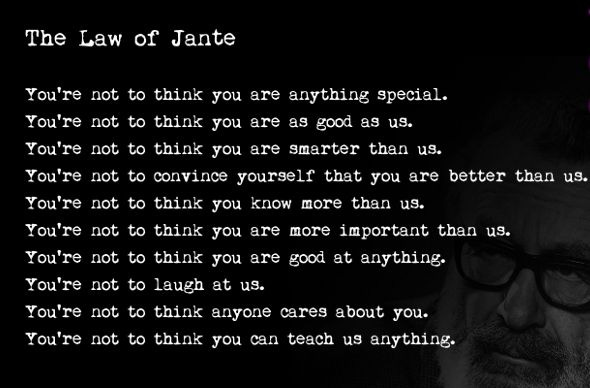
It’s woven so deep into the language that you absorb it long before you can name it. In English, for the first time, I noticed that rule simply wasn’t there. I could want things loudly. The brake had come off, and I hadn’t even known I’d been driving with it on.
That was the first time I felt, rather than understood, what a language actually is and how much meaning it holds.
A language is an operating system
Here’s the idea the whole thing rests on, stated as plainly as I can put it.
A language is an operating system you run your reality on.
People call it a skill, because that word is convenient and fits neatly on a CV or as a viral essay title. The truth is bigger and harder to see. When you learn a language, you install a different way of perceiving reality, a different sense of humor, a different emotional range, a different relationship to ambition and risk and time and even how close you stand to a stranger on a train.
Danish gave me that quiet brake on wanting too much. English handed me permission to be loud about it. Spanish, the language I now live inside considering the nationality of my girlfriend, runs on a completely different sense of time and closeness, where a two-hour lunch is a normal Tuesday and warmth comes standard.
Each one is a different machine for being a person. And each one can express things the others can barely reach. There are feelings I can only fully arrive at in one of my languages. There are jokes that die on the way across, because the listener doesn’t have the system installed to run them.
Once you’ve lived this even a little, the metaphor stops feeling like a metaphor.
The water you can’t see
I used to think people stayed stuck because they ran out of discipline.
I’ve stopped believing that.
The people I know who are genuinely stuck are not lazy. Most of them work harder than the people who aren’t. They read the books, they wake up early, they run the frameworks, and they stay in exactly the same place year after year, and it quietly erodes their confidence, because when you’re doing everything right and nothing moves, the only explanation left seems to be that something is broken in you.
I don’t think anything is broken in you.
I think you’re running your whole life on a single operating system, and nobody ever showed you that others exist.
This is the strange thing about an operating system. From the inside it doesn’t feel like one option among many. It feels like reality itself. The water you’re swimming in stays invisible precisely because you’ve never once been dry.
The way you see money, ambition, risk, what’s realistically possible for someone like you, all of it arrives with the weight of plain fact. That weight is the illusion. What feels like reality is the factory setting of the one system you happen to be running, and you’ve mistaken the edges of that system for the edges of the world.
You can’t think a thought your language has no shape for. And you can’t reach for a life your operating system has quietly filed under “not for people like you.”
A second language is the first hard proof that the settings can change.
Once you’ve felt yourself become a different, slightly braver person in a second tongue, you can never again fully believe the first version was simply “you.” You’ve seen behind the curtain.
You now know there’s a dial back there.
Reading the room is reading a language
For years people have told me I have a gift for reading a room. Walking into a space and clocking the mood, the hierarchy, who actually holds the power, what kind of person each one needs me to be, then adjusting on the fly.
People call that a social skill.
But if you really think about it, it’s the same skill from the beige computer and the international school, just pointed at people instead of countries.
Every person runs their own operating system. Every room has its own dialect, and so does every industry, every friend group, every family around a dinner table.
There’s the literal language, and underneath it the real one: the pace, the references, the kind of joke that lands here, the thing you’re allowed to want out loud in this room and the thing you’d better keep behind your teeth. Most people only ever hear the words.
By ten, I’d learned to listen for the system humming underneath them.
I spent years after that selling insurance on the phone. All day, strangers, about ten seconds to work out who someone was and become someone they’d actually keep talking to. I never once thought of it as language practice, but in retrospect, it turned out to be on of the most concentrated language training I’ve ever done. Hearing a person’s operating system in their first sentence and matching it is the whole game, on the phones and almost everywhere else in life (where, as you know, everything is technically a negotiation).
You can learn this too.
It begins exactly where it began for me, with accepting that the way you see things is one setting among many, and then getting genuinely curious about everyone else’s.
What you’re actually giving a child
So here’s something I believe almost more firmly than anything else about raising kids, and I don’t even have one yet.
When I do, the first real gift I give them won’t be a sport or an instrument or an early lead in math. It’ll be a second language, as early as is humanly possible, while the wiring is still wet and before they’re old enough to protest.
A young child’s brain is building itself in real time, laying down the roads the rest of their life will drive on. Put two (or even more) languages into that window and something permanent settles in.
They grow up knowing, in their body, long before they could ever explain it, that there is always more than one way to say a thing, which is the same as knowing there’s more than one way to see a thing, and more than one way to be a person. That flexibility becomes part of who they are. They carry an identity that expects other rooms, other rules, other versions of themselves, and is never frightened by any of them.
This has almost nothing to do with whether the child turns out “good at languages.” Plenty of bilingual kids mangle their grammar for life, and it changes nothing about the gift. What matters is that they will have known from the very start that the operating system is changeable, the one fact it took me until adulthood, a video game, and a room full of accents to stumble into.
A child who learns that early never has to spend their twenties quietly certain they were born missing something everyone else got. They begin with two pairs of eyes. And the world is a very different size when you can see it through more than one.
I still think about that kid at the beige computer sometimes. Half-following the chat, desperate to win, his mother in the doorway certain he was throwing away his afternoon. Most of what I’ve built since runs across countries and languages I had to go out and install one at a time, and all of it rests on a foundation I started pouring at ten years old without ever knowing it had a name.
She thought I was playing a game.
I was learning the one skill that makes every other skill portable.
If you take a single thing from this, let it be that the version of reality you woke up inside is not the only one on offer. There’s a dial back there, and there always was.
You’re allowed to reach over and turn it.
- Pascal
Things I work on outside this, in case any of them are useful:
@iampascio on Twitter, my profile where I post my experiments and numbers
@xgrowthpascal on Twitter, where I’m going from 0 to 10k followers in 3 months
@creatorpascal on Twitter, my personal brand where I share essays just like this one (currently doing 30 essays in 30 days. This is day 25).
Love this Pascio. I started following you bc of your templates and marketing emails (as inspiration), but those emails got boring very fast.. I honestly don’t even bother opening them anymore.. they’ve become noise.
But this?! This is good! And I relate to this, having had a similar journey at school and then tele-marketing, and then online business, and now templates and systems.. I also liked and agree with the thing about teaching kids a second language right away, but it is hard.. but again, it is important, you are absolutely right.
I have two, and between my wife and I, we speak 6 different languages, but English between us and at home.. and have neglected teaching them..so, thank you for your insights and the reminder!
Excellent!